Description
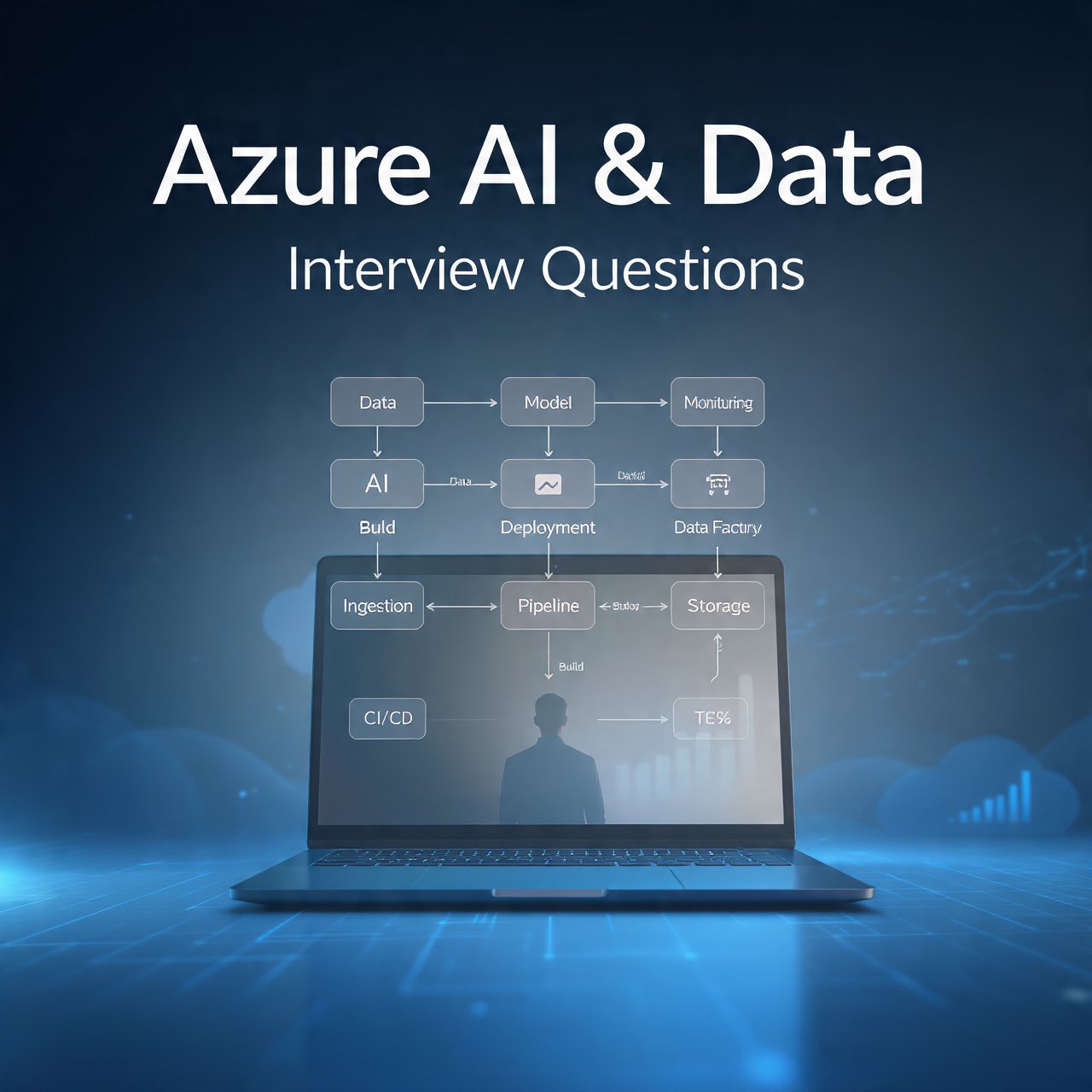
Azure AI Foundry, Azure Data Factory, and Azure DevOps
Azure AI Foundry purpose: unified enterprise platform to build, host, govern, and scale AI apps and agentic solutions with model catalog, agent frameworks, and observability.
Foundry model capabilities: access to Microsoft, partner, and open models; fine‑tuning, benchmarking, and model routing to optimize cost and quality.
Agent and orchestration features: create context‑aware agents, integrate with enterprise systems, and run hosted agents with serverless containers and event-driven functions.
Foundry knowledge and grounding: secure grounding of agents on enterprise data via Foundry IQ and connectors to search and knowledge stores.
Governance and observability: built‑in RBAC, tracing, monitoring, evaluations, and policy controls for fleetwide AI governance.
Azure Data Factory role: serverless ETL/ELT and orchestration service for hybrid data integration, visual pipeline authoring, and 100+ connectors for ingestion.
ADF transformation options: Mapping Data Flows (Spark-based), custom activities, and integration runtime choices for cloud and self‑hosted execution.
ADF production features: triggers (schedule, event, tumbling window), parameterization, Git integration, ARM templates, and monitoring for CI/CD.
Data engineering best practices: partitioning, incremental loads, tuning integration runtime, and cost‑aware orchestration for large pipelines.
Azure DevOps purpose: end‑to‑end delivery platform for planning, Git repos, CI/CD pipelines, testing, and artifact feeds.
Pipelines and automation: multi‑stage YAML pipelines, hosted agents, container/Kubernetes support, and pipeline‑as‑code for reproducible deployments.
Repos and quality controls: Git workflows, pull requests, branch policies, and code review automation to enforce standards.
Boards and testing: agile planning, work‑item traceability, and integrated test plans for shift‑left quality.
Artifacts and package management: private feeds for NuGet/npm/Maven/Python integrated with pipelines for secure, reproducible builds.
Security and DevSecOps: secrets management, role controls, policy enforcement, and pipeline scanning to embed security early.
Advanced topics for senior candidates: architecting agentic AI with Foundry, hybrid lakehouse patterns with ADF, GitOps and platform engineering with Azure DevOps, cost modeling, and enterprise governance at scale.
Interview focus: explain trade‑offs between managed services, design for idempotency and observability, pipeline CI/CD for data/AI workloads, and governance strategies for production AI.