Description
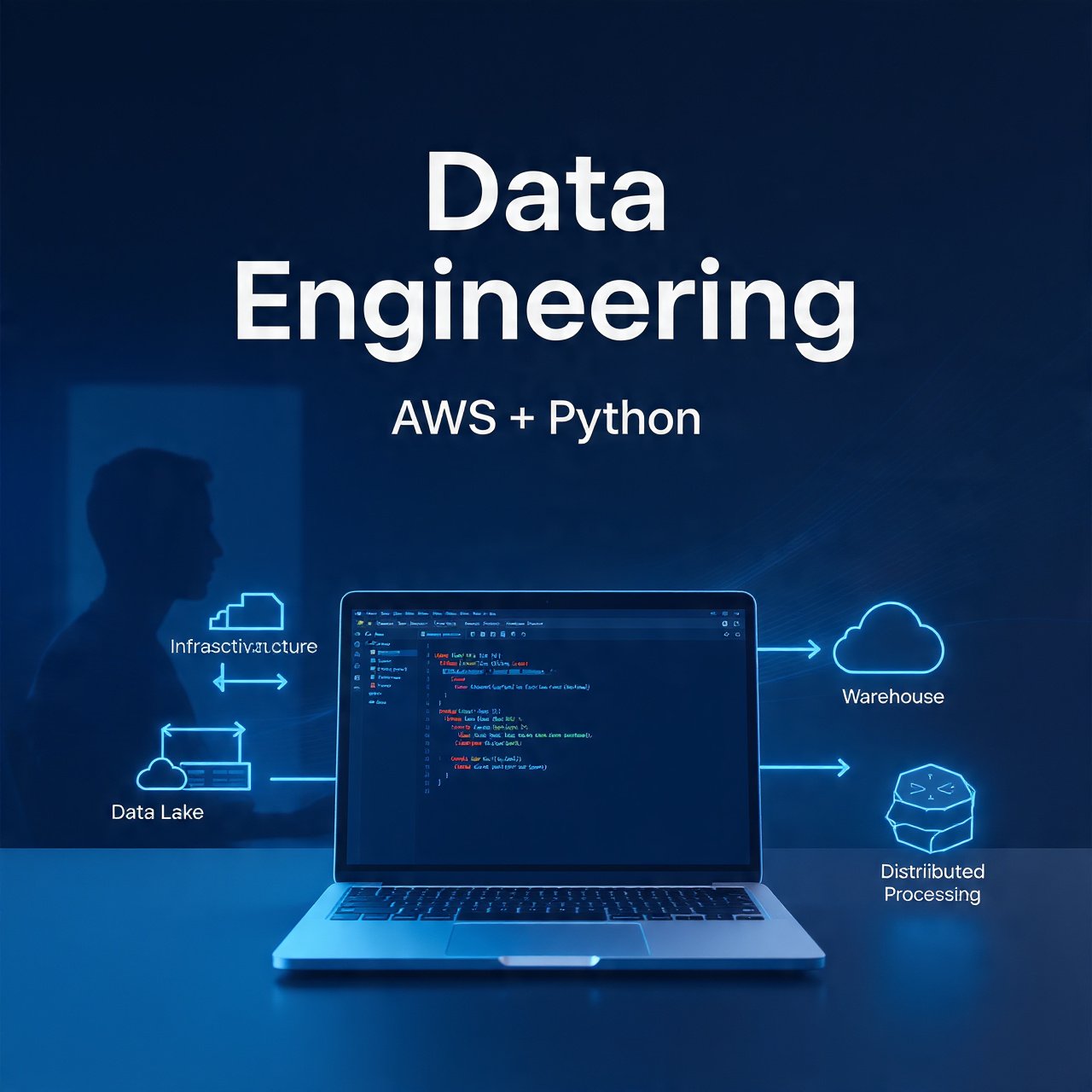
Data Engineering AWS PySpark Python
- Role summary: Data engineering with AWS + PySpark + Python builds scalable ETL, streaming, and ML-ready pipelines using Spark’s distributed compute and Python tooling.
- Core API: PySpark provides the Python API for Spark DataFrames, Spark SQL, RDDs, and Spark Connect for remote cluster clients.
- Storage integration: Native connectors to Amazon S3 (s3a), HDFS, and object stores make S3 the primary durable layer for large datasets.
- Cluster options: Use Amazon EMR, EKS, or self‑managed Spark clusters on EC2 with autoscaling and spot instances for cost‑efficient compute.
- Data formats: Parquet, ORC, Avro, and JSON support plus partitioning and predicate pushdown for fast I/O.
- Batch processing: Author robust, idempotent batch ETL jobs with DataFrame transformations, UDFs, and optimized joins.
- Streaming: Structured Streaming enables fault‑tolerant, exactly‑once stream processing for real‑time ingestion and windowed aggregations.
- Catalog and metadata: Integrate with AWS Glue Data Catalog or Hive metastore for schema discovery, table management, and query interoperability.
- Security: Leverage IAM roles, KMS encryption, VPC endpoints, and fine‑grained S3 policies to secure data and compute.
- Performance tuning: Partitioning strategy, broadcast joins, caching, shuffle tuning, and executor sizing are essential for throughput and cost optimization.
- Testing and CI/CD: Unit tests for Spark jobs, parameterized pipelines, and CI/CD pipelines for deployment and versioning of jobs and artifacts.
- Observability: Use CloudWatch, Spark UI, and custom metrics for job monitoring, lineage, and SLA alerts.
- Data quality: Implement schema enforcement, validation checks, and idempotent writes to prevent corruption and enable retries.
- Machine learning: Use Spark MLlib for scalable model training and integrate with Python libraries (scikit‑learn, TensorFlow) for advanced workflows.
- Advanced patterns: Delta/transactional layers, CDC ingestion, incremental processing, and orchestration with Airflow or Step Functions for complex DAGs.
- Senior expectations (5–12 years): Lead production MLOps, optimize cluster economics, design resilient streaming architectures, and enforce governance.
- Lead expectations (12–20 years): Architect cross‑account data platforms, define data contracts, cost governance, and align data strategy with business outcomes.
- Outcome: Mastery across these areas lets engineers deliver reliable, performant, and secure data platforms on AWS using PySpark and Python.