Description
- DevOps with Multi‑Cloud: concise verdict — adopt a provider‑agnostic CI/CD and infrastructure‑as‑code approach, standardize observability and security controls across clouds, and design for regional latency (choose cloud regions near Bengaluru) to meet enterprise SLAs.
DevOps with Multi‑Cloud — features and skills for 3–20 years experience
- Definition & value: Multi‑cloud DevOps means operating CI/CD, infrastructure, and runbooks across two or more cloud providers to avoid vendor lock‑in, optimize cost, and increase resilience.
- Platform‑agnostic IaC: mastery of Terraform, Pulumi, or Crossplane to provision consistent resources across AWS/Azure/GCP; use modules to enforce standards.
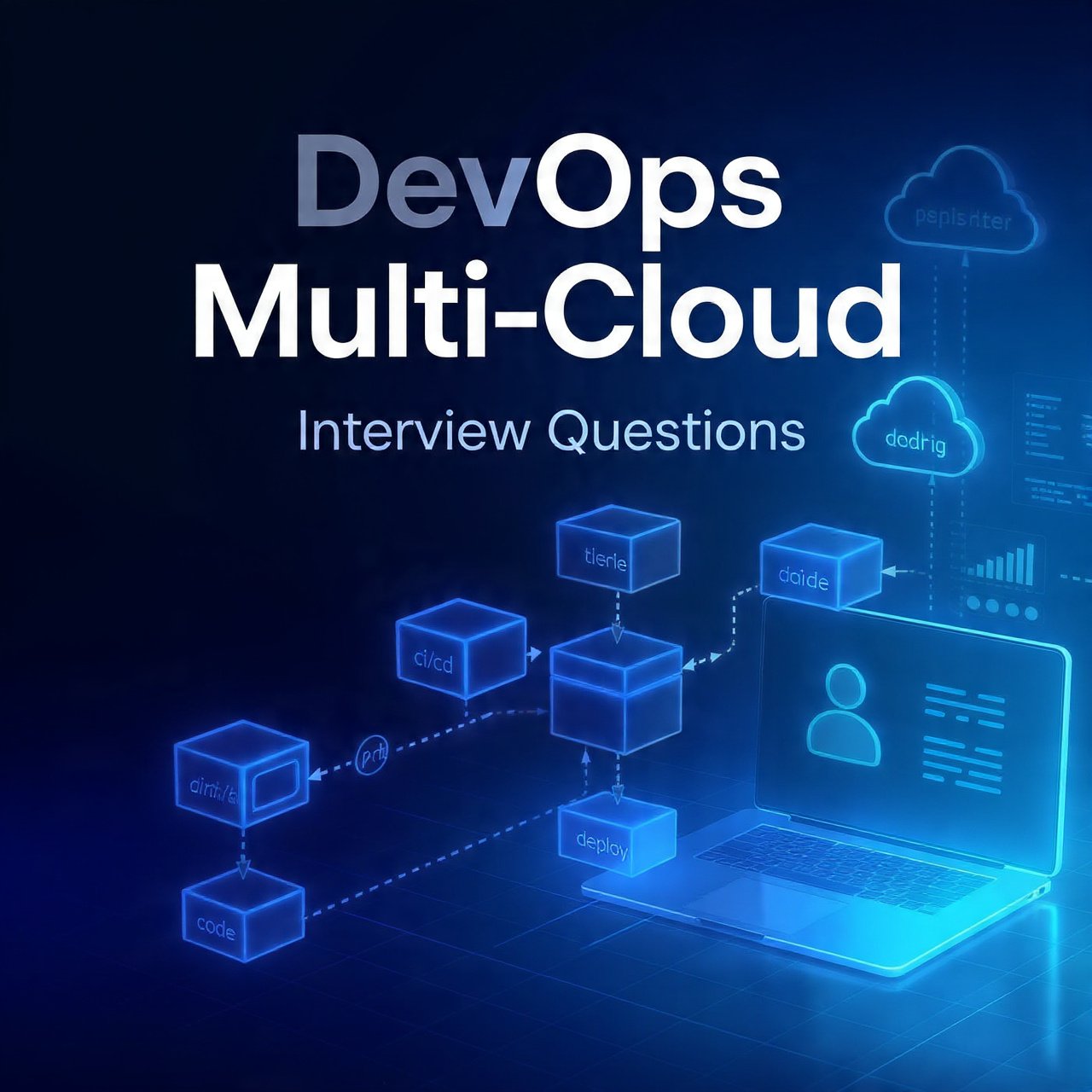
- Multi‑cloud CI/CD: design pipeline‑as‑code (YAML) that can deploy to multiple targets, with provider‑specific stages abstracted behind templates.
- Immutable infrastructure: use image baking (Packer), container images, and blue/green or canary deployments to reduce drift across clouds.
- Service mesh & networking: implement service mesh (Istio/Linkerd) or API gateways to unify service discovery, mTLS, and traffic policies across clusters.
- Observability fabric: centralize logs, metrics, and traces with OpenTelemetry, Prometheus, and a cross‑cloud logging backend for single‑pane troubleshooting.
- Policy and governance: enforce RBAC, policy-as-code (OPA/Gatekeeper), and cost guardrails centrally to maintain compliance across providers.
- Secrets and identity: adopt vaulted secrets (HashiCorp Vault, cloud KMS) and federated identity (OIDC/SAML) to avoid provider‑specific lock‑in.
- Resilience engineering: design cross‑region failover, active‑passive or active‑active patterns, and automated runbooks for provider outages.
- Data strategy: choose between replicated data stores, cross‑cloud object replication, or data mesh patterns depending on consistency and cost needs.
- Security posture: unify vulnerability scanning, container image signing, and pipeline security (SCA/DAST) across clouds.
- Cost optimization: implement cross‑cloud tagging, rightsizing, and spot/commitment strategies with centralized reporting.
- Platform engineering: build self‑service developer platforms (internal developer portals, shared pipelines, curated modules) to scale teams.
- Testing & quality: shift‑left testing, contract tests for cross‑service integration, and chaos experiments that include provider failure scenarios.
- Networking & latency planning: select regions close to Bengaluru (India South/Mumbai equivalents) and design edge/CDN strategies to meet latency SLAs.
- Compliance & data residency: map regulatory requirements to provider regions and automate evidence collection for audits.
- Advanced leadership topics: multi‑cloud SRE playbooks, vendor cost‑tradeoff modeling, platform SLAs, and migration/exit strategies.