Description
DataStage Features Basic to Advanced
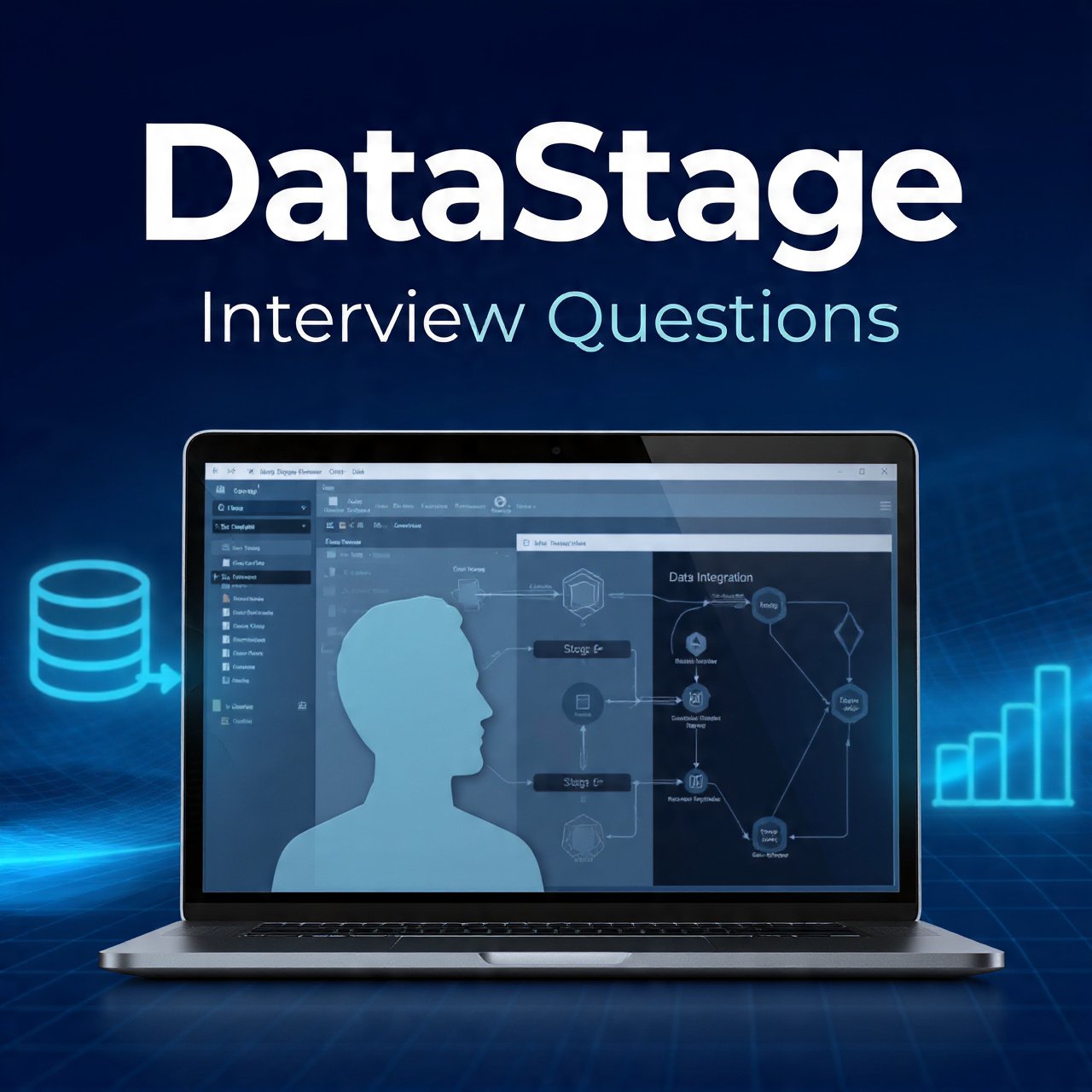
- Overview: IBM DataStage is an enterprise ETL/ELT engine for designing, scheduling, and running data integration jobs across on‑prem and cloud environments.
- Architecture: Designer, Director, Administrator, and runtime engines that support parallel processing and job orchestration.
- Connectivity: Wide set of connectors for relational DBs, files, message queues, mainframes, cloud storage, and SaaS sources.
- Job Design Basics: Graphical job canvas, reusable stages, transformers, lookups, joins, and built‑in data type conversions.
- Parallelism: Parallel Extender and partitioning strategies (round‑robin, hash, range) to scale throughput.
- Performance Tuning Basics: Pushdown optimization, pipeline buffering, and partitioning choices to reduce I/O and latency.
- Metadata and Cataloging: Integration with metadata repositories for lineage, impact analysis, and reusable schemas.
- Operational Features: Scheduling, job monitoring, restartability, checkpointing, and error handling for production reliability.
- Data Quality Integration: Built‑in transforms for validation, cleansing, deduplication, and standardization.
- Real‑time and CDC: Support for change data capture, message streaming, and near‑real‑time ingestion patterns.
- ELT Patterns: Push transformations to target warehouses or lakehouses to leverage target compute and reduce data movement.
- Cloud Modernization: Containerized deployments, cloud connectors, and integration with cloud data platforms and managed services.
- Advanced Tuning: Resource tuning, memory management, parallel engine sizing, and job partition redesign for high‑volume workloads.
- Automation and CI CD: Version control for jobs, automated deployment pipelines, parameterization, and environment promotion.
- Security and Governance: Role‑based access, encryption, secure credentials, and audit trails for compliance.
- Observability: End‑to‑end logging, metrics, SLA monitoring, and alerting for pipeline health and data freshness.
- Build and optimize jobs, implement CDC/streaming, troubleshoot performance, and enforce basic governance.
- Architect scalable DataStage landscapes, lead cloud migrations, define governance/CI CD strategy, and mentor teams on advanced tuning and observability.