Description
Blue Prism RPA Development — Overview
- Blue Prism is an enterprise-grade RPA platform for automating rule‑based, repeatable business processes.
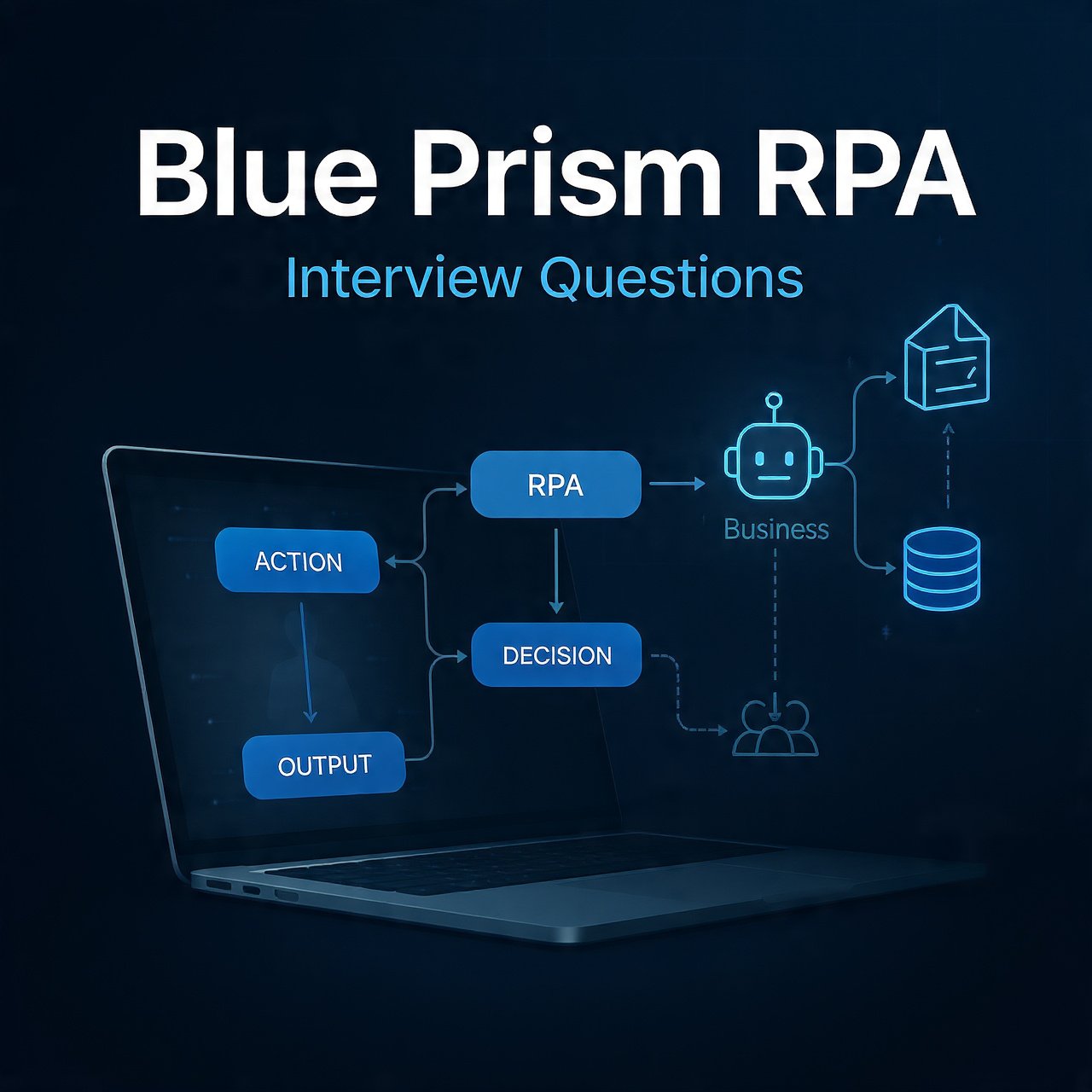
- Developers build automations using Process Studio (flow-based logic) and reusable components in Object Studio.
- The tool follows a code-free, visual development model that emphasizes business‑friendly process diagrams and object reuse.
- Control Room / Orchestrator handles scheduling, queue management, workload balancing, and robot lifecycle.
- Blue Prism enforces strong security and governance: role‑based access, audit trails, encrypted credentials, and centralized release controls.
- For mid‑level developers focus on robust exception handling, retry logic, and efficient queue design.
- Experienced developers should master object design patterns, reusable libraries, and integration via APIs and web services.
- Senior architects design scalable, resilient automation estates, including multi‑environment CI/CD and disaster recovery planning.
- Blue Prism supports integration with external systems via REST/SOAP, database connectors, and UI automation for legacy apps.
- Advanced features include digital workers, intelligent automation with AI/ML connectors, and document/IDP integrations for unstructured data.
- Performance tuning requires attention to session management, resource pooling, and efficient object calls.
- Testing best practices: unit test processes, use test harnesses for objects, and validate end‑to‑end with realistic queues.
- Deployment practices: use Deployment Manager for controlled releases and maintain separate Dev/Test/Prod environments.
- Monitoring and analytics: implement centralized logging, business metrics, and health dashboards to measure ROI and SLAs.
- Security/compliance owners expect auditability, change control, and data masking in production automations.
- Career growth: progress from process developer → solution designer → automation architect → automation COE lead.
- Continuous learning: stay current on Blue Prism releases, cloud deployment options, and intelligent automation partnerships.