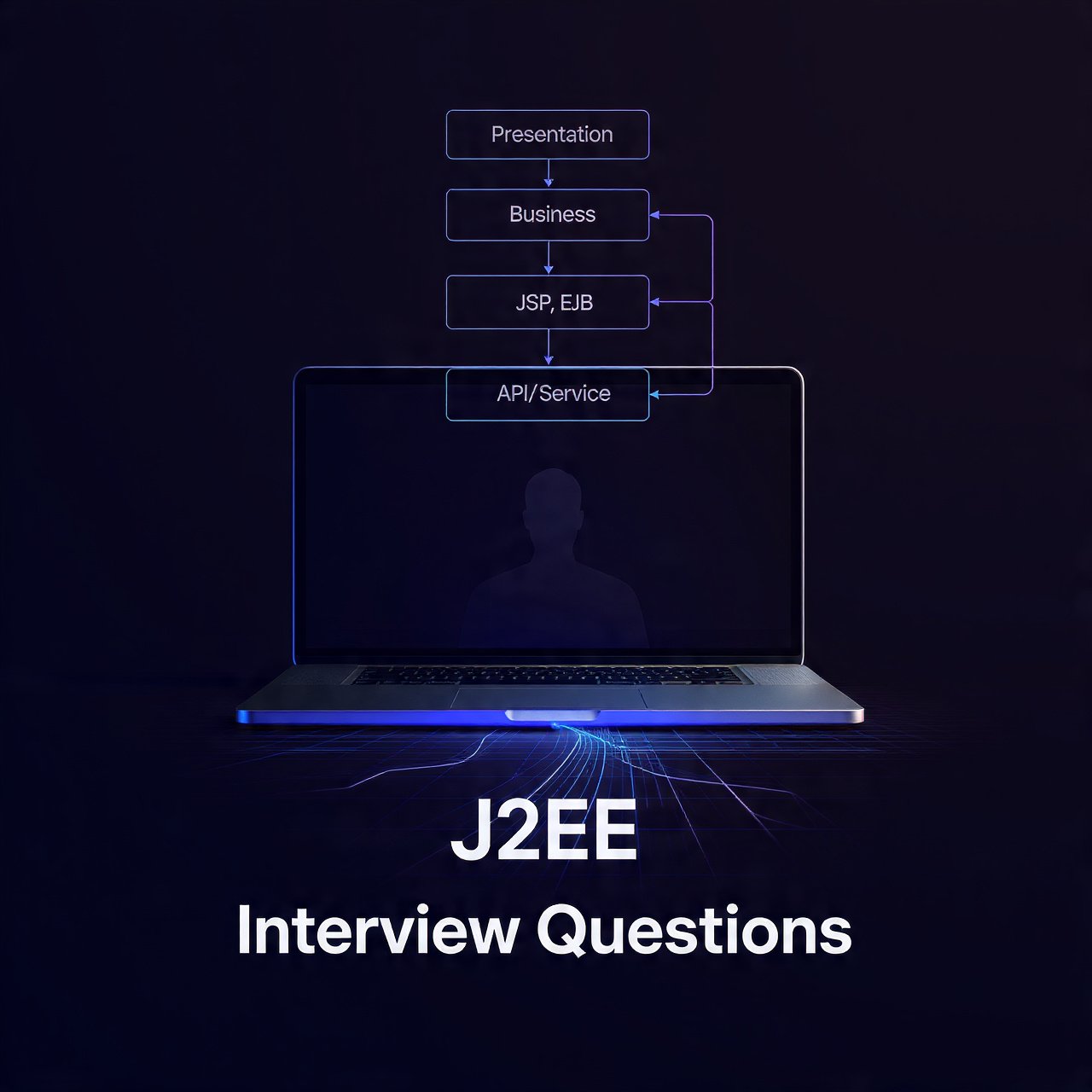
Description
- J2EE Overview and features
- Platform definition — Java 2 Platform, Enterprise Edition is a server‑side Java platform for building multi‑tier, portable enterprise applications.
- Component model — Enterprise JavaBeans (EJB) encapsulate business logic, lifecycle, and container services like pooling and transactions.
- Web tier — Servlets and JavaServer Pages (JSP) handle HTTP requests, session management, and view rendering for web clients.
- Persistence — Java Persistence API (JPA) and JDBC provide standardized data access patterns and ORM support for relational stores.
- Messaging — Java Message Service (JMS) enables asynchronous, reliable integration between components and external systems.
- Containers — Containers provide lifecycle, security, transaction, and resource management so developers focus on business code.
- Transactions — Built‑in transaction management (JTA) supports distributed, ACID transactions across resources.
- Security — Declarative and programmatic security, role mapping, and integration with enterprise identity stores are first‑class features.
- Interoperability — Standards for SOAP/REST (JAX‑WS, JAX‑RS) and XML/JSON make cross‑platform integration straightforward.
- Naming and lookup — JNDI centralizes resource lookup for datasources, EJBs, JMS factories, and environment entries.
- Scalability — App servers support clustering, session replication, and load balancing for high availability and scale.
- Deployment model — Standard packaging (EAR, WAR, JAR) and descriptors enable repeatable deployments across compliant servers.
- Connectors — Java Connector Architecture (JCA) standardizes adapters for legacy systems and EIS integration.
- Monitoring and management — JMX and server management APIs expose metrics, health, and runtime controls for operations teams.
- Modern evolution — J2EE evolved into Java EE and now Jakarta EE under Eclipse; modern stacks emphasize microservices, CDI, and lighter runtimes.
- Advanced topics — Advanced skills include distributed transactions, custom container interceptors, performance tuning, async processing, and reactive patterns.
- Interview focus by experience — For 3–7 years emphasize Servlets, JPA, transactions, and REST; for 8–12 years add clustering, security, and performance tuning; for 13–20 years highlight architecture, migration to Jakarta EE/microservices, and platform governance.