Description
GCP Infrastructure Engineer
GCP Infrastructure Engineer Overview and Skill Progression
- Role summary: designs, builds, and operates scalable infrastructure on Google Cloud to meet performance, security, and cost goals.
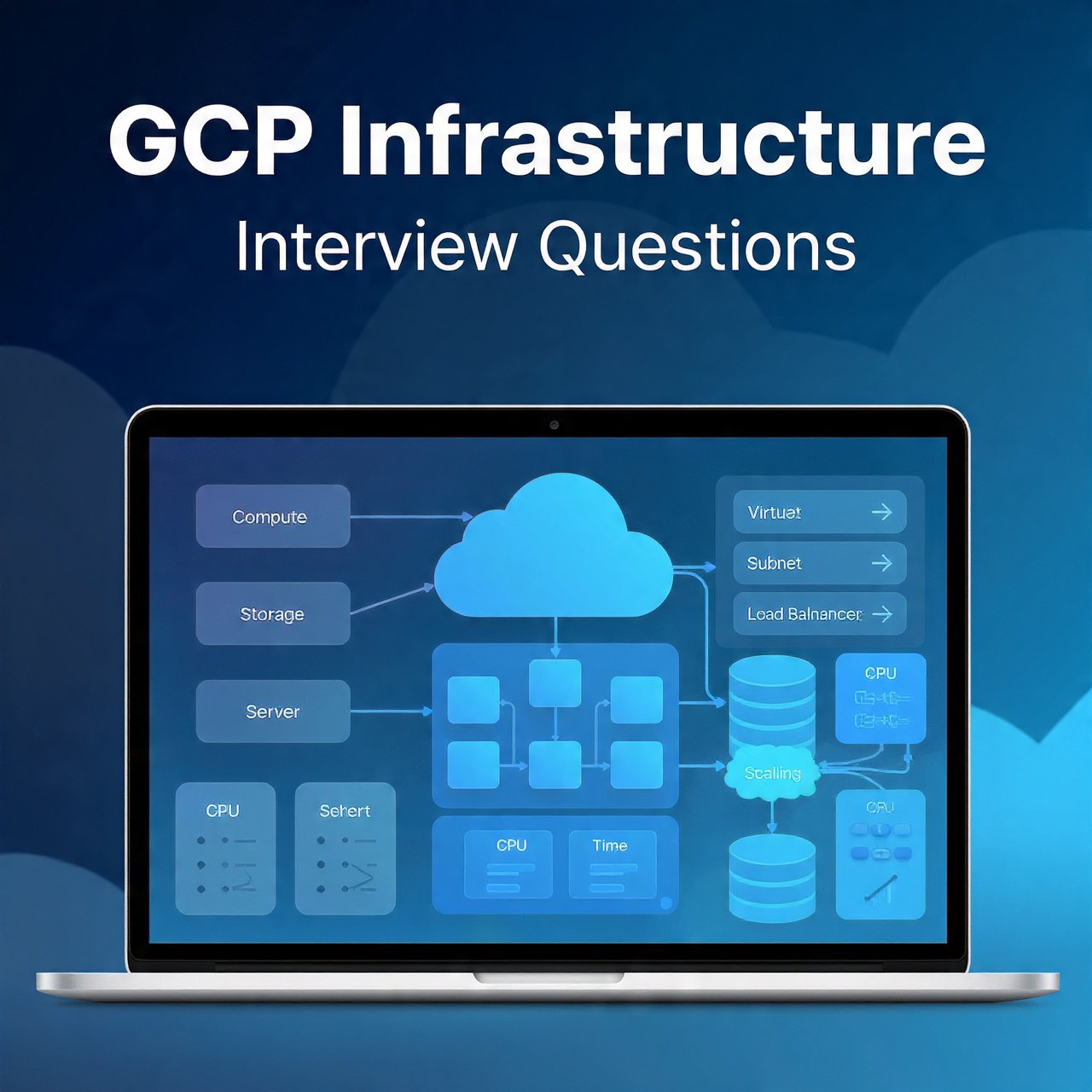
- Core services mastery: Compute Engine, Google Kubernetes Engine, Cloud Storage, Cloud SQL, BigQuery, and Cloud Load Balancing.
- Networking fundamentals: VPC design, subnets, routes, firewall rules, Cloud NAT, Cloud VPN, and Dedicated Interconnect.
- Identity and access: IAM roles and policies, service accounts, organization hierarchy, and least privilege design.
- Infrastructure as Code: authoring and maintaining Terraform modules and Deployment Manager templates for repeatable provisioning.
- Automation and CI CD: building pipelines with Cloud Build, GitOps patterns, and automated testing for infra changes.
- Security engineering: KMS, CMEK, VPC Service Controls, secure service‑to‑service authentication, and vulnerability hardening.
- Observability and SRE practices: Cloud Monitoring, Logging, Trace, SLIs SLOs and runbook driven incident response.
- Cost optimization: committed use discounts, resource right sizing, billing exports, and tagging for chargeback.
- Storage and data patterns: lifecycle policies, multi regional buckets, archival strategies, and performance tuning.
- Container orchestration: GKE cluster design, node pools, autoscaling, pod security policies, and workload identity.
- Resilience and DR: multi region architectures, backups, snapshots, failover strategies, and RTO RPO planning.
- Hybrid and multi cloud: Anthos fundamentals, private connectivity, and migration patterns for on prem to cloud.
- Advanced networking: traffic engineering, private services access, Cloud Armor, and global load balancing strategies.
- Platform integration: service meshes, Pub Sub event driven designs, and managed database selection tradeoffs.
- Testing and validation: infra unit tests, policy as code, pre deployment checks, and blue green or canary rollouts.
- Career progression focus: juniors master core services and IaC; mid level own end to end systems and automation; seniors lead architecture, governance, cost strategy, and cross team delivery.